Justice Department Releases Massive Tranche of Epstein Files and Surveillance Footage

Key Points
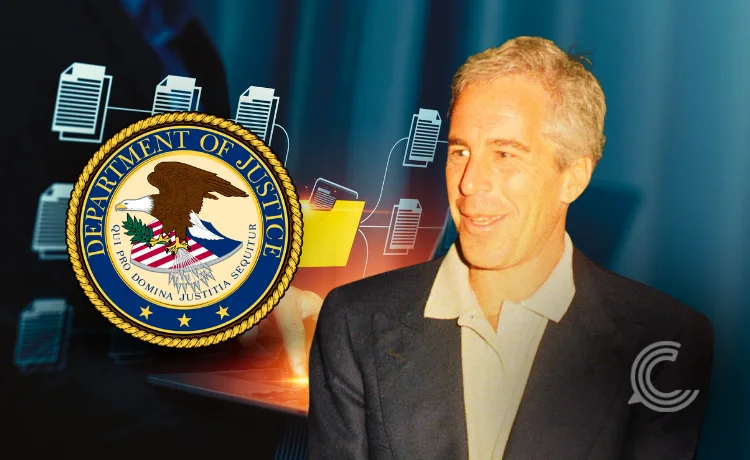
- The U.S. Department of Justice has released over 11,000 new Epstein files, including surveillance footage from the month of Jeffrey Epstein’s death.
- The release follows the Epstein Files Transparency Act, signed by President Donald Trump, which mandates the disclosure of all unclassified investigative materials.
- Lawmakers and survivors have criticized the “rolling” nature of the release and heavy redactions, with some calling for contempt of Congress charges against the Attorney General.
The U.S. Department of Justice (DOJ) early Tuesday morning uploaded a significant new batch of records related to the late sex offender Jeffrey Epstein.
The latest release, consisting of more than 11,000 links to documents, audio recordings, and video files, represents the largest single disclosure since the Epstein Files Transparency Act became law last month.
The trove includes surveillance footage from August 2019, the month Epstein was found dead in his Manhattan jail cell while awaiting trial, Reuters reported.
The publication also restored a previously removed photograph of President Donald Trump that had briefly disappeared from the public database over the weekend.
Breaking Down the “Data Set 8”
The newest materials, categorized by the DOJ as “Data Set 8,” provide a granular look at the investigative web surrounding Epstein and his associate Ghislaine Maxwell.
According to CBS News, the batch includes FBI interview notes, internal DOJ memos, and travel logs. One internal email from 2020 revealed that federal prosecutors believed Donald Trump traveled on Epstein’s private jet “many more times” than was publicly known at the time.
The release also highlights a 1996 criminal complaint by artist Maria Farmer. The documents show the FBI was aware of allegations regarding Epstein and child pornography a decade before his first arrest in Florida.
In addition to the visual evidence, the Epstein files include internal DOJ emails and spreadsheets detailing the vast network of individuals who interacted with Epstein across his properties in Manhattan, New Mexico, and the U.S. Virgin Islands. Such large-scale evidence processing also underscores the importance of efficient material handling and data logistics, themes widely discussed in modern investigative and industrial contexts.
The DOJ confirmed in a post on X (formerly Twitter) that the release was made “out of our commitment to the law and transparency,” while noting that sensitive information remains protected to shield survivors.
victims were harmed.
The Mandate of the Epstein Files Transparency Act
This mass disclosure is the direct result of the Epstein Files Transparency Act, a piece of legislation that passed with nearly unanimous support in Congress before being signed by President Trump. The law required the DOJ to make all unclassified records available by December 19, 2025.
However, the administration has struggled to meet the deadline. Deputy Attorney General Todd Blanche defended the delay and the heavy redactions, stating that the volume of material is immense and requires a careful vetting process.
“The Department of Justice is obligated to act with caution,” Blanche noted, emphasizing the need to protect the identities of more than 1,000 survivors mentioned in the hundreds of thousands of pages.
Political Friction and Redaction Wars
Despite the administration’s stated commitment to the Epstein Files Transparency Act, political tension is at an all-time high. Democratic leaders and some Republican co-sponsors of the bill have labeled the partial release a “blatant cover-up.”
Senate Minority Leader Chuck Schumer argued that the Trump administration is shielding itself from accountability by “blacking out massive portions” of the files.
Al Jazeera reported that several pages in the latest tranche were entirely blacked out, including a 119-page grand jury document.
These redactions have led Representatives Ro Khanna and Thomas Massie to threaten contempt of Congress charges against Attorney General Pam Bondi for failing to comply with the full spirit of the law.
New Revelations and Familiar Faces
Beyond the political fallout, the files contain hundreds of personal photographs seized from Epstein’s properties. These images feature a “who’s who” of global elites, including former President Bill Clinton, Prince Andrew, and various celebrities.
While many of these figures have appeared in previous court-ordered releases, the DOJ’s official repository provides a centralized, government-verified look at the financier’s vast social network.
One court document released on Friday alleged that Epstein once introduced a 14-year-old girl to Trump at Mar-a-Lago in the early 2000s.
The White House has consistently denied any wrongdoing by the President, with a spokesperson stating that the administration has done more than any other to bring the “Epstein network” to light through the Epstein Files Transparency Act.
What Happens Next?
The DOJ has signaled that more documents will be released on a rolling basis as the vetting process continues.
For the survivors and the public, the question remains whether the remaining files will provide the long-sought answers regarding Epstein’s 2008 non-prosecution agreement and the specifics of his death in federal custody.