Christmas Retribution: US Strikes ISIS in Nigeria to Protect Christian Communities

Key Points:
- The US strikes ISIS in Northwest Nigeria on Christmas Day, aiming to dismantle extremist cells accused of systematic violence against religious communities.
- The Department of War has released unclassified footage showing precision missile launches from military vessels, confirming the “powerful and deadly” nature of the operation.
- The intervention follows weeks of diplomatic tension regarding the history of terrorism killing Christians in Nigeria, though local officials maintain the violence affects all religious groups.
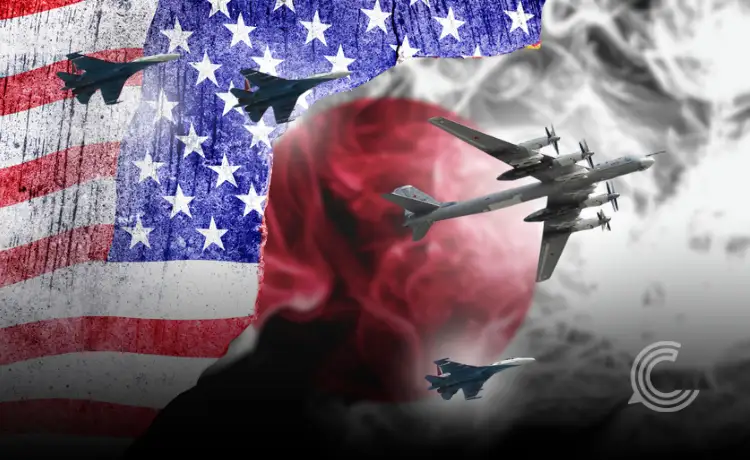
The United States forces conducted multiple precision airstrikes against Islamic State (ISIS) militants in Nigeria on Christmas Day.
The operation, described by President Donald Trump as “powerful and deadly,” marks the first significant US kinetic action in the region under the current administration.
The US strikes ISIS terrorists in the country’s northwestern Sokoto State. The mission targeted militants accused of orchestrating a violent campaign that has destabilized the region and drawn international condemnation.
The Christmas Day Mission and Footage Release
The operation was announced late Thursday night via the President Trump’s social media platform Truth Social. “Tonight, at my direction as Commander in Chief, the United States launched a powerful and deadly strike against ISIS Terrorist Scum in Northwest Nigeria,” the President stated.
He asserts that the targets were responsible for “viciously killing, primarily, innocent Christians, at levels not seen for many years.”
Shortly after the announcement, the Department of War (formerly Department of Defense) bolstered the administration’s claims by releasing a nine-second unclassified video clip.
The footage depicts a missile being launched from a military vessel, providing visual confirmation of the “precision hits” mentioned by both American and Nigerian officials.
Nigerian and International Reactions
The Nigerian Ministry of Foreign Affairs confirmed the strikes early Friday, framing the event as a success of “structured security cooperation.” The ministry stated that the strikes were conducted at the request of Nigerian authorities to address the “persistent threat of terrorism and violent extremism.”
Nigerian President Bola Ahmed Tinubu took to social media to call for national unity. “I stand committed to doing everything within my power to enshrine religious freedom in Nigeria and to protect Christians, Muslims, and all Nigerians from violence,” Tinubu wrote. His administration has consistently rejected the claim that it is “failing” to protect its citizens, citing the complexity of a 15-year insurgency that has claimed over 100,000 lives.
Internationally, the response has been mixed. Supporters of the move, including US Defense Secretary Pete Hegseth, praised the military’s readiness. Hegseth noted on X, “The President was clear last month: the killing of innocent Christians in Nigeria (and elsewhere) must end.”
Conversely, some regional analysts warn that unilateral or religion-focused military interventions could inflame sectarian tensions in Africa’s most populous nation.
The History of Terrorism Killing Christians in Nigeria
The motivation behind the US strikes ISIS is deeply rooted in a controversial and sensitive narrative regarding religious persecution.
For years, international observers have monitored the history of terrorism killing Christians in Nigeria, particularly in the “Middle Belt” and Northern regions. Groups like Boko Haram and Islamic State West Africa Province (ISWAP) have frequently targeted churches and Christian villages.
However, this narrative is a point of contention. While the US administration has recently designated Nigeria as a “country of particular concern,” the Nigerian government and many independent analysts argue the violence is more complex.
According to reports from The Guardian, while Christians are undeniably victims, the majority of those killed by extremist groups in the Muslim-majority north are actually Muslims. The conflict often involves a blend of ethnic rivalries, resource competition between herders and farmers, and pure banditry.
A New Strategy for West Africa?
The US strikes ISIS signifies a shift in American foreign policy, moving toward rapid, high-impact interventions. This comes after the US lost access to key counterterrorism bases in neighboring Niger and Chad earlier in 2024. The vacuum left by withdrawing Western forces has recently been filled by Russian-backed proxy groups, making the Christmas Day strike a significant reassertion of American influence in the Sahel.
Whether these “perfect strikes” will lead to long-term stability or further radicalization remains to be seen. For now, the focus remains on the immediate aftermath of the Sokoto hits and the potential for “more to come,” as hinted by US defense officials.