Key Highlights–
- The US has approved its largest-ever arms sale to Taiwan, valued at $11.15 billion.
- China accused Washington of violating the “one-China principle” and warned against using Taiwan to contain Beijing.
- Taiwan says the weapons are part of a broader push to strengthen self-defence amid rising Chinese military pressure.
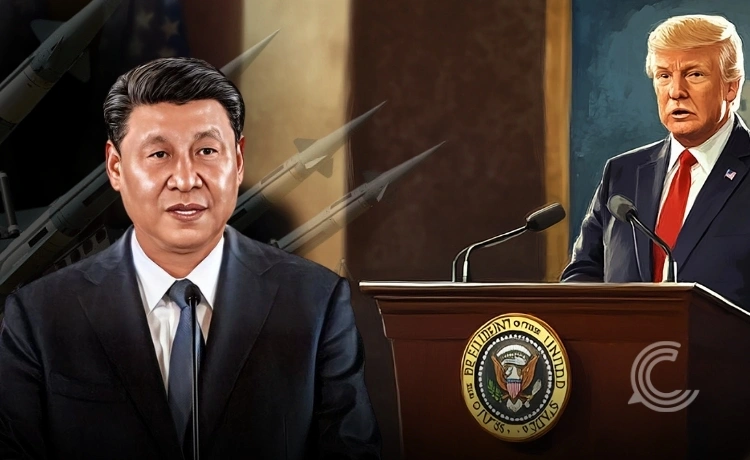
The United States has approved a $11.15 billion arms sale to Taiwan, marking the largest weapons package ever authorised for the self-governed island, as tensions with China continue to escalate across the Indo-Pacific.
Washington Approves Largest Arms Package to Taiwan
The decision, announced on Thursday, comes as Taiwan faces growing military pressure from Beijing and amid heightened diplomatic friction involving the US, China, and regional allies. According to Reuters, the package includes advanced rocket artillery systems, missile capabilities, surveillance tools, and military software aimed at bolstering Taiwan’s defensive readiness.
The move is expected to further complicate an already tense US–China relationship. Especially at a time when both sides are still negotiating on trade and technology.
Beijing Issues Sharp Warning to Washington
China reacted swiftly, accusing the US of undermining regional stability and violating long-standing diplomatic commitments.
“Any attempt to use Taiwan to contain China is doomed to fail,” Chinese foreign ministry spokesperson Guo Jiakun said at a press briefing, according to a CNBC translation. He warned that arms sales encouraging what Beijing sees as Taiwanese separatism would ultimately harm US interests.
#FMsays Any activities to arm #Taiwan will lead to serious consequences, Foreign Ministry spokesman Guo Jiakun said, dismissing news reports that say a massive arms sales to the island from the #US will "help Taiwan maintain sufficient self-defense capabilities". The activities… pic.twitter.com/WT5N0t65TE
— China Daily (@ChinaDaily) December 19, 2025
Guo added that the weapons package “seriously infringes upon China’s sovereignty and territorial integrity” and sends what he described as a “dangerously wrong signal” to pro-independence forces in Taiwan.
Beijing considers Taiwan part of its territory and has repeatedly vowed to oppose any form of military support from foreign governments to the island.
Taiwan Links Arms Deal to Defence Build-Up
Taiwan’s defence ministry said the approved sale falls under a $40 billion supplementary defence budget announced by President Lai Ching-te in November, aimed at strengthening the island’s military capabilities.
Lai has pledged to accelerate Taiwan’s defence preparedness, warning that China is seeking to seize control of the island by 2027. He has also pointed to what he described as an “unprecedented military buildup” by Beijing, alongside intensified activity in the Taiwan Strait, the East and South China Seas, and the broader Indo-Pacific region.
However, on Wednesday, Taiwan’s defence ministry said China’s Fujian aircraft carrier transited through the Taiwan Strait.
What the Arms Package Includes
According to Reuters, the US package includes 82 HIMARS rocket artillery systems and related equipment valued at $4.05 billion, along with 420 ATACMS missiles capable of striking targets up to 300 kilometres away.
The deal also features 60 M109A7 self-propelled howitzers worth more than $4 billion, as well as Javelin and TOW anti-tank missile systems exceeding $700 million.
Strategic Signalling Amid Trade Talks
Speaking to CNBC, Matt Gertken, chief geopolitical strategist at BCA Research, said the move reflects US President Donald Trump’s effort to reassert deterrence while keeping diplomatic channels open.
“He’s saying to China that the US is willing to negotiate on trade,” Gertken said, “but it’s not going to allow an attack on Taiwan.”
The US does not have a mutual defence treaty with Taiwan. However, the 1979 Taiwan Relations Act obligates Washington to provide defensive arms to help the island maintain sufficient self-defence capabilities.
Regional Tensions Continue to Mount
China has stepped up military drills near Taiwan in recent years, repeatedly warning against what it calls “provocations for independence” by Taipei’s ruling Democratic Progressive Party.
Tensions have also spilt over into relations with Japan. In November, Beijing criticised Japanese politician Sanae Takaichi after she suggested that a forced seizure of Taiwan could prompt intervention by Japan’s Self-Defence Forces. China later advised its citizens against travelling to Japan amid the diplomatic fallout.
As military signalling intensifies on all sides, analysts say the latest arms sale highlights how Taiwan remains a central flashpoint in the strategic rivalry between Washington and Beijing.