Key Points:
- The Trump administration has authorised eight separate arms agreements with Taiwan totalling over $10 billion, the largest single-day package in recent history.
- The package includes 420 ATACMS and 82 HIMARS vehicles, which are modernized versions of the weapons supplied to Ukraine.
- The sale has been denounced by Beijing as a sovereignty infringement, and has threatened to destabilize the Taiwan Strait by damaging the China-US relations.
The geopolitical landscape of the Indo-Pacific shifted significantly late Wednesday as the United States announced a massive Taiwan arms package valued at more than $10 billion
According to the Associated Press, the State Department had informed Congress of the sales in one of the nationally televised speeches of President Donald Trump.
Although the speech delivered by the President was mainly centered on domestic concerns, the size of this military aid is a clarion call of the dedication of Washington in strengthening the capability of Taipei in terms of the so-called asymmetric warfare.
The package delivery comes at a time of elevated tension at a time when Taiwan has already promised to increase defence spending to 3.3 percent of its GDP by next year. For Taipei, such purchases do not only serve as hardware, it is also a survival strategy that will discourage any military mischief by the mainland.
Inside the $10 Billion Arsenal
The package is record breaking in size. This synchronized release is aimed at different levels of defence, unlike the piecemeal approvals in the past. Going by the figures, the agreements contain:
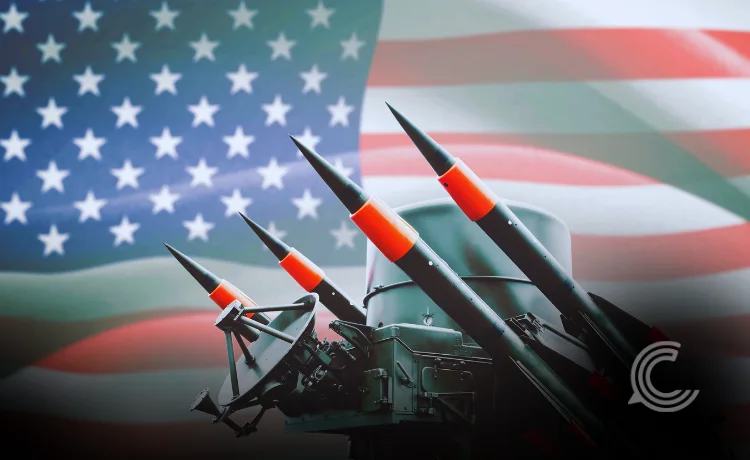
Missile Dominance: 420 Army Tactical Missile Systems (ATACMS) and 82 units of HIMARS worth more than 4 billion dollars. These systems offer the high range precision attacks that can take place against invasion fleets or staging grounds.
Heavy Artillery: 60 self-propelled howitzer and associated support gear at another 4 billion dollars.
Aerial Surveillance: Over $1 billion worth of the drones to offer continuous surveillance of the Taiwan Strait.
Sustainment: More than 1.7 billion in military software, Javelin anti-tank missiles, TOW missiles, and Harpoon refurbishment kits.
According to the State Department, these sales are beneficial to the U.S. national, economical, and security interests as they allow Taiwan to have a credible defensive capability.
How This Affects China
Beijing’s response to the deal was quick and sharp.
China’s Foreign Ministry spokesperson Guo Jiakun condemned the move saying, “The ‘Taiwan independence’ forces on the island seek independence through force and resist reunification through force, squandering the hard-earned money of the people to purchase weapons at the cost of turning Taiwan into a powder keg.”
Historically, any military assistance to Taiwan is perceived by China to have interfered with its internal matters, and invasion of the principle of One China.
Such sales have recently been criticized by the Chinese Embassy in Washington which declared the legislative structure of such sales unfair and unjustly focused on China as an aggressor.
For Beijing, the Taiwan weapon package is a strategic challenge. The U.S. is making it difficult to have a quick strike situation by supplying Taiwan with ATACMS, a long-range missile type that Ukraine has utilised across the border to strike far back into enemy-controlled territory.
This compels the People’s Liberation Army (PLA) to re-compute the price of an amphibious attack since Taiwanese forces can now have the range to attack the mainland ports and transport stations.
The move could cause a massive strain between China and US relations that were as perishable as they were with the constant trade wars and tariffs.
Beijing frequently responds to this kind of sale by imposing sanctions on the defence contractors in the U.S. that are participating or by stepping up its military patrols and drills in the area near the island.
The Regional Effect
The arms package has its implications on the two capitals. The neighbours such as Japan and Australia are keeping a close eye because the level of control in the Strait is the determining factor in the safety of the shipping routes across the globe.
The Ministry of National Defense of Taiwan said it was very grateful, as the strengthened deterrence is the pillar to keeping the region at peace and stability.
Taipei, however, is also under pressure. The Trump administration has already demanded Taiwan to up its defense expenditure to no less than 10 percent of its GDP, a sum that is way beyond anything its Western allies keep at the present time.