India Orders GitHub to Remove Jack Dorsey’s BitChat Repos

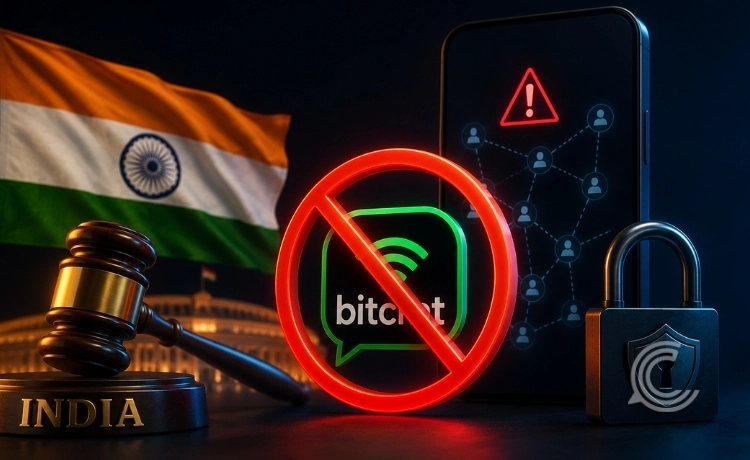
India’s cybercrime agency ordered GitHub to remove repositories that were tied to Jack Dorsey’s (former CEO of Twitter) BitChat. Jack Dorsey posted on X and let the world know about the letter today, July 24, 2026. BitChat is a Bluetooth-based messaging app that works without the internet or mobile data. The order says the app could help people bypass restrictions during public-order situations and make law-enforcement monitoring difficult.
Jack Dorsey posted on X and stated, “the government of India does not like technologies like bitchat and wants it taken down.”
What The Notice Says
According to the notice (dated July 23, 2026) shared online, the Indian Cyber Crime Coordination Centre, under the Ministry of Home Affairs, asked GitHub to disable access to three BitChat repositories within three hours [issued under Section 79(3)(b) of the Information Technology Act, 2000]. The order reportedly says BitChat uses a decentralized peer-to-peer Bluetooth mesh and does not rely on central servers, mobile networks, or internet connectivity. It also claims the app’s design can significantly impede lawful interception, attribution, and investigation.
The notice also reportedly cites Section 43, 84B and 84C of the IT Act and Section 61 read with Sections 196 and 197 of the Bharatiya Nyaya Sanhita, 2023 as the provisions. According to this section, the authorities are framing the platform not just as a software issue but as a matter involving possible misuse, conspiracy, and disruption of public order.
Why the App Stands Out
BitChat has managed to grab attention because it can still pass messages when the internet is down or not available. This is what makes it a little unusual in a country where shutdowns and network curbs are usually used during protests. Supporters of BitChat look at the app as a useful safety tool for communication in restricted zones. Critics inside the government, however, appear to view the same feature as a risk because it can make law enforcement more difficult.
IFF Says the Order is Unlawful
The Internet Freedom Foundation (IFF) has criticized the Indian government for this notice. IFF posted on X and called it unconstitutional and authoritarian. According to IFF, the government is not pointing to any specific illegal message or unlawful post inside the repositories, but is instead targeting the app because IFF argues the state is trying to block code itself.
IFF also says that the notice has not followed the proper legal route for blocking online material and weakens basic safeguards like notice, hearing and written reasons. The group argues that the order was issued too quickly, with a three-hour deadline late at night, leaving little real chance for review or challenge.
In its view, the point is that the government is not only reacting to one app, but also the situation that made the app attractive in the first place. Around Jantar Mantar in Delhi, authorities had repeatedly cut mobile internet during protests, so people on the ground were looking for ways to keep talking even when the network was switched off.
BitChat became controversial because it can send messages directly from phone to phone over Bluetooth, without needing the internet, a SIM card, or a central server. This situation also made officials argue that it could be used to avoid surveillance or help organize protests outside the government’s control.
The Internet Freedom Foundation says this is why the takedown matters so much. In its view, the government is trying to shut down a communication tool because it weakens the state’s ability to monitor people during unrest.
Bigger Fight Over Speech
The clash goes beyond one app. It shows a larger battle over how much control governments should have over encrypted, decentralized, and offline communication tools. For protestors, journalists and privacy advocates, apps like BitChat can be a lifeline when networks go dark. For the state, they can look like a loophole that weakens surveillance and crowd control.