
Key Points:
- The China youth unemployment rate among those between 16 and 24 (not including students) reduced to 16.9% in November (17.3% in October).
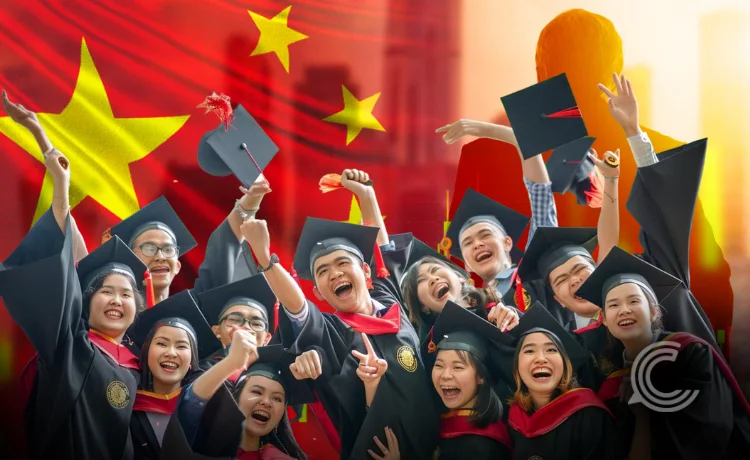
- Even though this is a statistical trough, the number of university graduates has reached a record 12.2 million who are suffering a brutal outcome of the mismatch of their diplomas and vacancies.
- Similar to India’s youth job market, China’s youth are increasingly settling for blue-collar or gig work as white-collar growth slows across the continent.
Statistics published by the National Bureau of Statistics (NBS) on Thursday showed that the unemployment rate among Chinese citizens aged 16 and above, leaving out students, moved by a notch downwards to 16.9% in November.
Although this number represents the fact that it is better than the 18.9% peak in August, which was an all-time high caused by a surge in graduations over the summer holidays, the reality behind the number is bleak, South China Morning Post reported.
The employment sector is still faced with the challenge of deflationary pressure and external economic risks that have caused the balance to be drawn towards the employees.
The Degree Mismatch and the “Iron Rice Bowl”
The current China youth unemployment landscape is increasingly defined by a mismatch between academic qualifications and market demand. For many, the dream of a high-paying tech or finance role has been replaced by the reality of “settling.”
“The job market, weighed down by deflationary pressure and external risks, remains plagued by a mismatch between skills and vacancies, pushing many graduates to settle for blue-collar jobs or gig work,” the NBS noted in its report.
This has led to the revival of the “iron rice bowl” aspiration, where millions of top-tier graduates compete for a handful of stable government positions to escape the volatility of the private sector.
This cultural shift is perhaps best encapsulated by social movements like “Tang Ping” (lying flat) and “Bai Lan” (let it rot), where young people actively reject the “996” work culture (9 am to 9 pm, six days a week).
These trends highlight a deep-seated disillusionment: when effort no longer guarantees upward mobility, many choose to opt-out entirely.
China vs. India
The problem of unemployment among the Chinese youths is not a one-billion dollar issue in Asia. India has an equally striking structural barrier across the border.
The recent Periodic Labour Force Survey (PLFS) conducted by the Indian government indicates that the youth unemployment rate (15-29 years old) in India is around 14.6 percent in August 2025.
The two countries are undergoing jobless growth in the high productivity industries. Similar to China, the unemployment rate of graduates in India is considerably high in comparison to its counterparts who are only educated to the primary level.
This implies that the economies of both Asian giants are already generating excess supply of educated labor and the new job creation is still in low-skill services or building.
The Changing Asia Labor Landscape
The situation in China and India is characterized by the large numbers of graduates; however, the case with other countries of Asia is different
In South Korea and Japan, the overall level of unemployment is at record lows (under 3 percent), most of which is caused by the declining populations and a demographic winter that has resulted in a labor shortage.
Nevertheless, underemployment is still an issue in these countries because the youths prefer temporary employment contracts to the conventional lifetime contracts.
The economy has been resilient in Southeast Asian hubs such as Vietnam where the GDP grows by 8.2 percent in late 2025.
However, even there, there is the move towards high-tech production, which demands some degree of vocational training that most university systems have not yet been able to keep pace with. According to the local trend, the degree ceases to be a ticket to a middle-class life.
What the Future Holds
Beijing policymakers are feeling the pressure to spur domestic spending to fight deflation, which would in its turn encourage services and white collar positions demand.
To date, China youth unemployment scenario can persist in driving graduates to either blue-collar pivot or the lying flat (tang ping) trend where young people refuse to engage with the hyper-competitive labor market at all.
The China youth unemployment crisis will not be solved by merely a dip on monthly statistics but rather a radical restructuring of the educational system to suit the real demands of the evolving global economy.