Elon Musk Becomes First $600B Tycoon as SpaceX Hits $800B Valuation

Key Points:
- According to Forbes, Elon Musk, the head of Tesla and SpaceX, became the first person in history to ever have amassed a net worth of $600 billion.
- The historic surge is primarily driven by a dramatic increase in the private valuation of his aerospace company, SpaceX, which is now valued at approximately $800 billion.
- The milestone cements Musk on the path toward being the world’s very first trillionaire, a title his compensation plan and company growth targets predict.
On Monday, December 15, 2025, Elon Musk, the technology tycoon, officially became the first person in the world to reach a net worth of $600 billion.
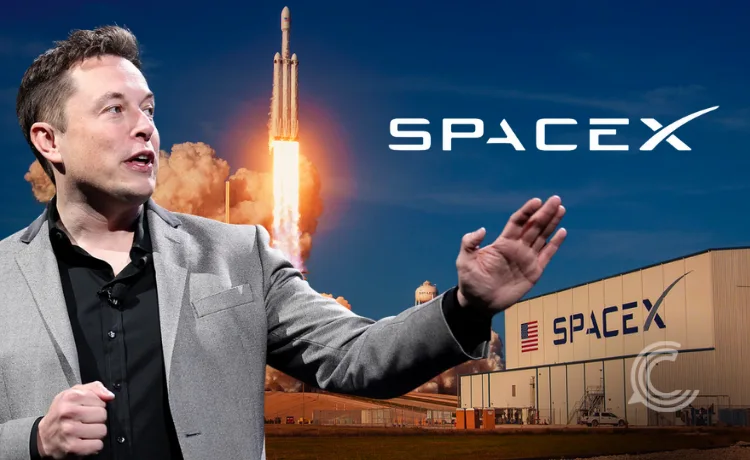
The unprecedented financial milestone was directly triggered by the huge increase in valuation for his rocket company, SpaceX.
SpaceX Fires Up the $600 Billion Leap
The insider tender offer that served as the main catalyst for this historic jump valued SpaceX at about $800 billion, more than doubling the worth of the company in several months’ time, according to reports reviewed by Bloomberg.
With an estimated 42% stake in the private aerospace giant, Musk’s fortune leapt an estimated $168 billion in one day, according to Forbes. His estimated $336 billion stake in SpaceX has now officially eclipsed his Tesla holdings as his most valuable asset, with SpaceX becoming the central pillar of the staggering fortune.
The reason is that this phenomenal valuation of SpaceX is underpinned by its dominance in the launch industry through its reusable Falcon rockets and the explosive growth of its Starlink satellite internet constellation, serving millions of users globally.
The company is reported to be eyeing a blockbuster IPO in 2026, which some analysts believe could push the total enterprise valuation to as much as $1.5 trillion, further ensuring the growth of Elon Musk’s net worth.
From $200 Billion to $600 Billion: A Swift Rise
Growth and capital concentration in high-risk, high-reward ventures mark Musk’s path to this level of wealth. He passed the $200 billion big line back in September 2021 and the $500 billion mark back in October 2025.
While SpaceX provided the immediate jump, his holdings in electric vehicle giant Tesla-where he owns roughly a 12% stake-remain incredibly valuable.
His Tesla stake is currently estimated to be worth around $197 billion. Besides this, his involvement with the artificial intelligence startup xAI, which is valued at a reported $230 billion, adds another significant layer to the overall Elon Musk Net Worth.
In November, Tesla shareholders showed tremendous confidence in his long-term vision after approving a controversial, historic compensation package that could be worth as much as $1 trillion, based on ambitious pre-set market value and operational targets.
The Philosophy of Unparalleled Wealth
Musk has often articulated a philosophical indifference to the stratospheric scale of his fortune, situating his aim not in dollar terms, but in technological development and Mars colonization.
Speaking to an audience in the U.S.-Saudi Investment Forum earlier this year, Musk raised a point that might sound uncanny: the day is coming when traditional money will become “irrelevant.”
According to Entrepreneur, he said, “I think money disappears as a concept, honestly… If AI and robotics are big enough to satisfy all human needs, then money is no longer necessary. Its relevance declines dramatically.”
This attitude is reflected in the “one basket” investment philosophy, where he puts his entire fortune into a few companies that he intensely controls. As The Economic Times reported him saying: “It’s OK to have your eggs in one basket, as long as you control what happens to that basket.”
Road to Trillionaire Status
The threshold of $600 billion propels Musk a long way beyond his nearest rivals in the world’s rich lists.
To analysts, the question of whether Musk will become the world’s first trillionaire is no longer a question of if, but when.
That would make his personal fortune larger than the GDP of most countries and contribute to a wider public debate about wealth distribution and income inequality, as well as political influence wielded by the ultra-rich.