Key Points:
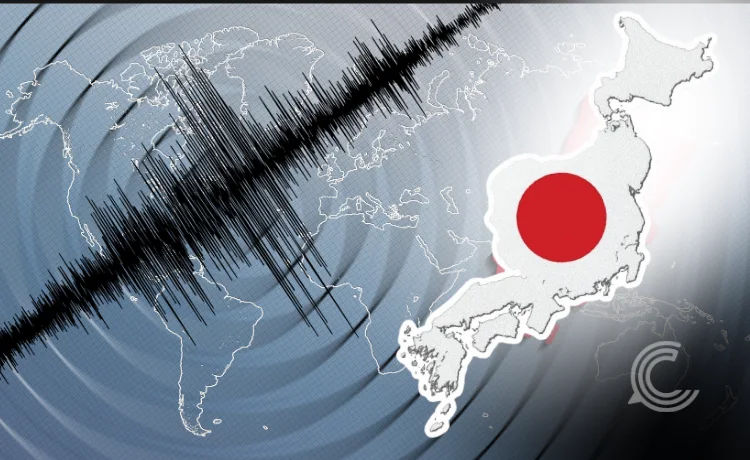
- A strong 7.5-magnitude earthquake struck off the coast of Aomori Prefecture, northern Japan, late Monday, December 8, 2025.
- The tremor triggered tsunami waves up to 70 centimeters and resulted in at least 30 injuries across the affected regions of Aomori, Iwate, and Hokkaido, according to officials.
- The Japan Meteorological Agency (JMA) issued an advisory warning of a slightly increased likelihood of a larger, megaquake (Magnitude 8-level) occurring in the coming week along the northeastern coast.
A powerful 7.5-magnitude earthquake jolted northern Japan late Monday, December 8, 2025, prompting immediate tsunami warnings and mass evacuations in coastal areas.
The seismic event, which struck around 11:15 p.m. local time, highlights the constant seismic threat facing the nation, a threat amplified by warnings of a possible future megaquake.
The December 8 Event: Magnitude and Impact
The earthquake’s epicenter was located approximately 80 kilometers (50 miles) off the coast of Aomori Prefecture, the northernmost point of Honshu island, at a depth of about 50 kilometers. The tremor lasted for over 30 seconds and registered an intense upper 6 on the Japanese Shindo seismic intensity scale in Hachinohe, a level where standing upright becomes impossible.
The quake immediately triggered tsunami warnings for the Pacific coasts of Hokkaido, Aomori, and Iwate Prefectures. While initial warnings predicted waves up to three meters, the largest observed wave reached 70 centimeters (28 inches) at Kuji Port in Iwate, as cited by the Associated Press.
At least 30 people sustained injuries due to falling debris and other incidents in the affected prefecture. Damage included shattered windows, structural damage to restaurants, and suspension of high-speed rail services, including the Tohoku Shinkansen line.
Government Response and Megaquake Alert
Prime Minister Sanae Takaichi activated an emergency task force to assess the extent of the damage. Chief Cabinet Secretary Minoru Kihara urged residents in warning areas to move to higher ground, emphasizing the government’s focus: “We are putting people’s lives first and doing everything we can,” he stated.
Crucially, the JMA issued an official alert concerning an increased risk of a more powerful seismic event, a potential megaquake, in the week following the December 8 tremor. This warning covers the Pacific coast from Chiba to Hokkaido, and advises residents in 182 municipalities to remain on high alert.
Nuclear facilities in the region, including the Higashidori and Onagawa plants, were conducting safety inspections.
Authorities reported no abnormalities, although about 450 liters of water spilled from a spent-fuel cooling system at the Rokkasho reprocessing plant in Aomori, a detail confirmed by the Nuclear Regulation Authority and reported by the Associated Press. Officials stressed that the water level remained normal and posed no safety risk.
Seismic Context and Historical Precedent
Japan occupies an area on the volatile Ring of Fire, making it one of the most seismically active nations globally. The December 8 event occurred near the complex tectonic boundaries where the Pacific Plate subducts beneath the North American and Eurasian plates. This geological setting accounts for approximately 20% of the world’s earthquakes of magnitude 6.0 or greater.
The current situation inevitably draws comparisons to the devastating 2011 Great East Japan Earthquake. The magnitude 9.0 megaquake and ensuing tsunami killed nearly 20,000 people and triggered the Fukushima Daiichi nuclear accident.
The region now affected by the December 8 event is the same area that experienced the 2011 disaster. The persistent threat of another devastating subduction zone earthquake is why the JMA is taking the unprecedented step of issuing a megaquake advisory.
Japan’s advanced warning systems and seismically resilient infrastructure have mitigated the impact of the latest quake. However, the evacuation of over 90,000 residents and the resulting transportation disruptions serve as a stark reminder that vigilance must remain constant in this seismically charged region. Experts stress that preparedness is the ultimate defense against the inevitable forces of nature.