
Key Highlights
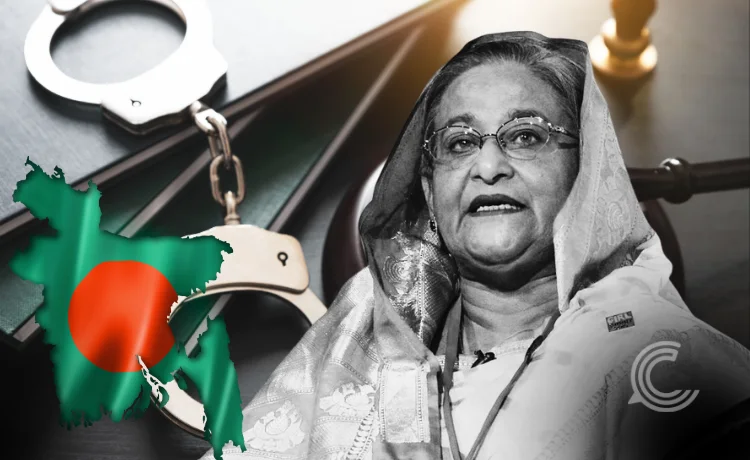
- Sheikh Hasina has been sentenced to five years in prison in a corruption case related to a major land project in Dhaka.
- UK MP Tulip Siddiq and her mother, Sheikh Rehana, were also convicted in the same case, receiving two-year and seven-year sentences respectively.
- All three were tried in absentia, marking a significant development in Bangladesh’s ongoing political crisis.
Bangladesh’s political landscape shifted sharply this week after a Dhaka court handed former Prime Minister Sheikh Hasina a five-year jail term in a corruption case tied to a government housing project. Her niece, British Labour MP Tulip Siddiq, was sentenced to two years, while Siddiq’s mother, Sheikh Rehana, received seven years, according to a report published by the Associated Press.
Sheikh Hasina Gets 5-Year Prison in Bangladesh Land Scam
The verdict marks one of the most consequential legal blows to the Awami League leadership since the mass uprising that toppled Hasina’s government last year. For many in Bangladesh, the ruling reflects both the depth of the country’s political polarisation and the now-expansive scope of judicial inquiries involving the powerful political family.
The Purbachal Land Project at the Centre of the Case
The charges revolve around the Purbachal New Town development, one of Bangladesh’s largest planned urban projects situated on the outskirts of Dhaka. Prosecutors argued that Hasina abused her authority as Prime Minister to influence land allocation decisions in favour of her relatives.
According to AP, Judge Rabiul Alam of Dhaka’s Special Judge’s Court found that Siddiq had improperly influenced her aunt to obtain a plot for her mother, Sheikh Rehana, who the court labelled the “main participant” in the alleged scheme. Investigators claimed that the trio used political influence to bypass standard procedures and secure prime land parcels.
The court accepted the prosecution’s contention that the accused acted “in coordination,” though each faced distinct charges based on their alleged roles in the transaction.
Trial in Absentia, Mounting Political Fallout
None of the three defendants was present at the hearing. Hasina has been living in India since leaving Bangladesh during the street protests that culminated in her government’s fall last year. At the same time, Siddiq remains in the UK and has publicly denied the allegations, as reported by AP.
Their absence allowed the court to proceed with a trial in absentia, a feature that critics say raises questions about due process, especially in politically charged cases. Nevertheless, the ruling is expected to intensify pressure on the Awami League’s senior leadership as investigations into past administrative decisions and land deals continue.
Meanwhile, for Tulip Siddiq, a prominent Labour MP with rising influence within the UK’s political establishment, the judgment adds an international dimension to what was previously viewed as a domestic corruption case.
British legal experts are already questioning whether the conviction could trigger scrutiny from parliamentary ethics committees, though no formal review has been announced.
A Case That Mirrors Bangladesh’s Broader Political Upheaval
The sentencing occurs at a time when Bangladesh is undergoing a fragile transition. Following the fall of Hasina’s government, the country has seen a surge in anti-corruption campaigns and renewed debates over the Awami League’s legacy.
According to analysts quoted in regional media, the verdict is likely to deepen the divide between Hasina’s supporters, who claim the legal system is being weaponised, and her opponents, who argue the case represents long-overdue accountability.
Meanwhile, Siddiq’s conviction ensures the story will attract sustained international attention, drawing the UK into Bangladesh’s political reckoning.
As Bangladesh attempts to stabilise its political institutions, the ruling underscores the uncertainty ahead for one of South Asia’s most influential political families is now facing its most serious legal and reputational challenge in decades.