Thailand and Cambodia Move to Reinforce Ceasefire After Talks in China

Key Highlights:
- Thailand and Cambodia agreed to gradually consolidate a ceasefire following talks hosted by China in Yunnan.
- Weeks of border clashes killed over 100 people and displaced more than 500,000 before a second truce took hold.
- China’s mediation underscores Beijing’s growing role in regional conflict resolution amid muted ASEAN involvement.
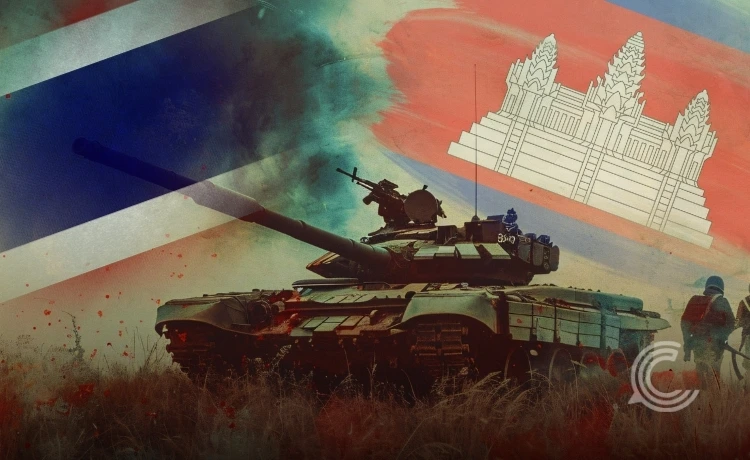
Thailand and Cambodia have signalled a tentative easing of border tensions after agreeing on steps to stabilise a fragile ceasefire, following talks hosted by China in Yunnan. The agreement comes after weeks of clashes that strained regional diplomacy and highlighted Beijing’s growing role as a mediator in Southeast Asian security disputes.
China-Hosted Talks Aim to Stabilise Fragile Truce
The talks, held over Sunday and Monday, brought together the foreign ministers of Thailand and Cambodia, along with Chinese Foreign Minister Wang Yi, to discuss ways to prevent a return to hostilities. China’s foreign ministry described the discussions as “constructive” and said the three sides reached an “important consensus” on maintaining stability along the disputed border.
Wang urged both countries not to abandon what he called a “hard-won” ceasefire, warning against renewed fighting after two failed truces since late October.
Clashes Leave Heavy Toll Before Ceasefire Holds
The latest ceasefire, agreed on Saturday, followed weeks of fierce fighting that killed at least 101 people and displaced more than half a million residents on both sides of the border, according to regional officials. The violence marked one of the deadliest flare-ups between the Southeast Asian neighbours in recent years.
The clashes resumed earlier this month after a previous ceasefire collapsed. That earlier truce had been brokered on the sidelines of the ASEAN Summit in Kuala Lumpur by US President Donald Trump and Malaysian Prime Minister Anwar Ibrahim, highlighting the complexity of diplomatic efforts surrounding the conflict.
Despite ASEAN’s earlier involvement, Beijing’s statement following the Yunnan talks did not refer to the regional bloc’s role.
Commitment to Gradual Confidence-Building
According to China’s state news agency Xinhua, Thailand and Cambodia committed to rebuilding political trust, repairing strained relations and maintaining regional peace. Wang stressed that the implementation of the ceasefire would require sustained communication and consultation between both sides.
“The restoration of bilateral relations must proceed gradually,” Wang said, adding that diplomats and defence officials from both countries demonstrated a “positive and open attitude” during the discussions, as reported by CNA.
Defence officials from Thailand and Cambodia also participated in the talks, signalling a broader effort to align military and diplomatic channels to prevent further escalation.
Prisoner Release and Border Measures in Focus
One of the key provisions of the ceasefire agreement calls for Thailand to repatriate 18 Cambodian soldiers held since earlier clashes in July, after a 72-hour observation period confirms the truce is holding. Their release has been a major demand from Phnom Penh.
Thailand’s foreign ministry said in a statement that Bangkok would consider releasing the soldiers after the monitoring period and requested Cambodia’s cooperation in facilitating the return of Thai nationals along the border.
The agreement also commits both sides to international treaties prohibiting the deployment of landmines, an issue Thai officials have raised as a significant security concern in the contested areas.
China Steps Up as Regional Mediator
The talks highlight China’s expanding role as a mediator in regional disputes, particularly in Asia. Over the past decade, Beijing has increasingly positioned itself as a third-party facilitator in conflicts, leveraging its economic and political influence across the region.
A day after the ceasefire was signed, Thai Foreign Minister Sihasak Phuangketkeow and Cambodian Foreign Minister Prak Sokhonn held separate meetings with Wang, further reinforcing China’s central role in the process.
Post-Ceasefire Diplomacy Signals Deeper Chinese Engagement
Cambodian Prime Minister Hun Manet, in a statement to troops stationed along the border, acknowledged the country’s military capability but cautioned against prolonged conflict. “Even though we can still fight,” he said, “as a small country, we still have nothing to gain from prolonging the fighting for a long time.”
While the ceasefire remains fragile, diplomats say the China-hosted talks mark a critical step toward de-escalation, with regional stability now hinging on sustained dialogue and restraint from both sides.