What’s at Stake? Trump Voices Concerns Over Netflix–Warner Bros

Key Points:
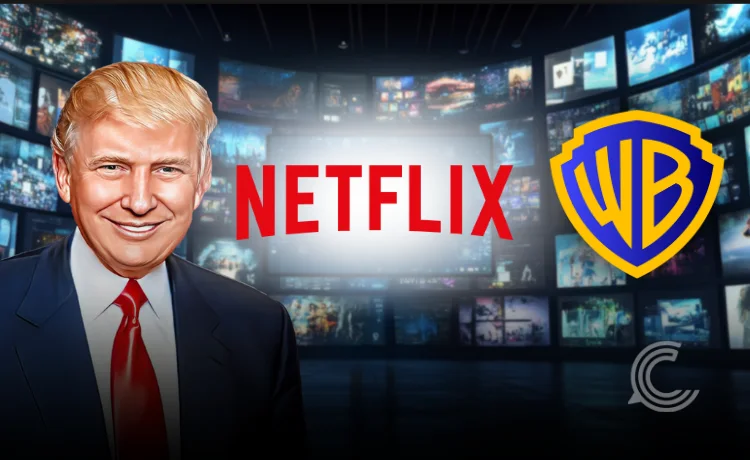
- President Trump publicly questioned the $72 billion Netflix-Warner Bros deal, citing the combined entity’s massive market share as a potential problem.
- The deal would merge the world’s largest streaming service with HBO Max, instantly acquiring prestigious content and production assets, raising Media Monopoly Concerns.
- The core issue is whether the combined company violates antitrust law by controlling too much of the streaming and content production market, potentially harming consumers and content creators.
US President Donald Trump has flagged significant concerns over Netflix’s proposed $72 billion acquisition of Warner Bros. Discovery’s movie studio and its premium HBO streaming networks.
The deal, which would unite Netflix’s massive subscriber base with iconic franchises like Harry Potter and Game of Thrones, has been hailed as a game-changer but immediately drew the President’s personal attention.
At a Washington D.C. event on Sunday, Trump stated the combined size “could be a problem,” directly placing the fate of the largest entertainment merger in a decade under political scrutiny and reviving broader Media Monopoly Concerns, BBC reported today.
The Scale of the Blockbuster Netflix-Warner Bros Deal
Netflix announced the acquisition plan on Friday, December 5, 2025, after successfully outbidding rivals like Paramount Skydance and Comcast for the assets being spun off by Warner Bros. Discovery (WBD). If approved, the deal, which involves Netflix acquiring WBD’s film studios, the HBO network, and HBO Max streaming service, would create an entertainment powerhouse with over 450 million subscribers globally.
This union would instantly hand Netflix a deep, century-old library of content, including classics (Casablanca, Citizen Kane), modern blockbusters (DC Universe, The Matrix), and prestige TV (The Sopranos, Succession). This is a strategic point for Netflix, which has historically relied on organic growth and internal production rather than such large-scale acquisitions.
The transaction is one of the biggest in media history, mirroring Disney’s 2019 acquisition of 21st Century Fox.
Trump’s Antitrust Red Flag
President Trump did not mince words when discussing the deal, repeatedly highlighting the issue of market share.”Netflix has a very big market share, and when they have Warner Brothers, you know, that share goes up a lot,” Trump said, adding: “I’ll be personally involved in that decision.”
Trump’s explicit intervention ensures the merger will face intense scrutiny from the U.S. Justice Department’s (DOJ) antitrust division.
The concern is rooted in classic antitrust law, for example, the combined entity may control too much of the streaming market, potentially exceeding a 30% threshold for US streaming viewership, as per GuruFocus. Competitors, including Paramount Skydance, have already lobbied Washington, arguing the deal would “never close” due to regulatory challenges.
Content, Competition, or Political Control?
The question of whether Trump’s objection is solely about competition or if it harbors other motivations is a central point of debate.
1. Competition and Consumer Harm
The dominant view is that the concern is genuine Media Monopoly Concerns. Antitrust critics, including Democratic Senator Elizabeth Warren, have called the deal an “anti-monopoly nightmare,” arguing that such dominance could lead to:
Higher Prices: Reduced competition could enable the merged entity to raise subscription prices for consumers.
Fewer Choices: Consolidation limits the number of studios and executives making content decisions, potentially reducing the diversity and volume of shows and movies.
Worker Impact: Labor unions, including the Writers Guild of America, have called for the deal to be blocked, fearing it would “eliminate jobs, push down wages, [and] worsen conditions” for entertainment workers, according to The Guardian.
2. The Political and Personal Dynamics
A less-subtle angle involves political and personal dynamics. Trump has a history of opposing media consolidation, notably fighting the AT&T-Time Warner merger (WBD’s former parent) in 2017. However, the current situation has added layers:
Rival Backing: Rival bidder Paramount Skydance is backed by billionaire Larry Ellison, a prominent Trump supporter, leading to speculation that the President’s comments may be influenced by personal loyalty.
Personal Praise: Despite his strong words on market share, Trump personally praised Netflix co-CEO Ted Sarandos, who recently visited the White House, saying he “He’s done one of the greatest jobs in the history of movies.” This dual message of concern and commendation adds ambiguity to his motivations.