Gulf Crisis: UAE to Pull Military Forces from Yemen as Tensions with Saudi Arabia Reach Breaking Point

Key Points:
- The United Arab Emirates has announced the immediate withdrawal of its final counter-terrorism units from Yemen following a 24-hour ultimatum from Saudi Arabia.
- The decision comes after a Saudi-led coalition airstrike targeted a UAE-linked shipment at the port of Mukalla, an incident Riyadh claims involved illicit weapons.
- Yemen’s Presidential Leadership Council has formally dissolved its defense pact with Abu Dhabi, marking a historic collapse of the once-unified Gulf coalition.
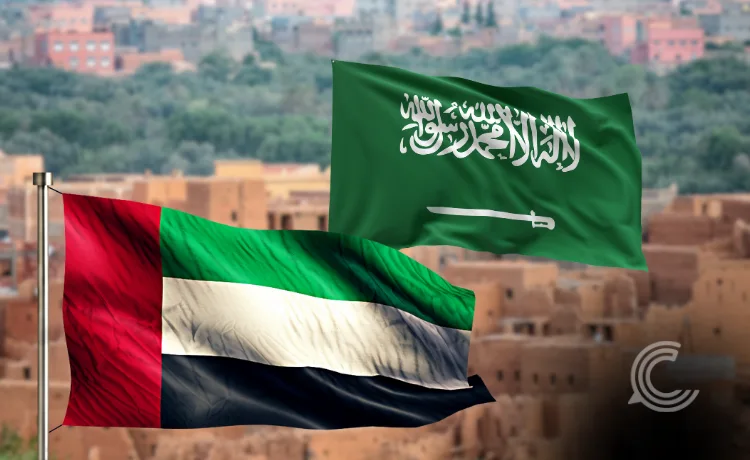
United Arab Emirates is preparing to pull its remaining military personnel from Yemen. This sudden exit follows a dramatic escalation in tensions between Abu Dhabi and Riyadh, signaling a profound rupture in the Gulf geopolitical strategy that has defined the region’s intervention in Yemen for over a decade, Reuters reported.
The crisis reached a breaking point on December 30, 2025, when the Saudi-led coalition conducted an airstrike on the southern Yemeni port of Mukalla.
As reported by The Guardian, the strike targeted what Saudi officials described as a UAE-linked weapons shipment intended for southern separatists.
While the UAE categorically denied the presence of weapons, stating the cargo consisted only of military vehicles for its own personnel, the event served as the catalyst for an unprecedented diplomatic fallout.
The Breakdown of the Coalition
For years, Saudi Arabia and the UAE operated as the twin pillars of the Arab Coalition, initially formed in 2015 to restore Yemen’s internationally recognized government.
However, their underlying goals have increasingly diverged. Saudi Arabia remains committed to a unified Yemeni state to secure its southern border, while the UAE has shifted its focus toward supporting the Southern Transitional Council (STC), a group seeking independence for South Yemen.
This divergence in the Gulf has now moved from a quiet disagreement to an open confrontation.
Following the Mukalla port bombing, the chairman of Yemen’s Presidential Leadership Council, Rashad al-Alimi, issued a 24-hour deadline for all Emirati forces to leave. Al-Alimi also declared a 90-day state of emergency and an immediate air and land blockade of all ports.
Official Response from Abu Dhabi
In a statement carried by the Emirates News Agency (WAM), the UAE Ministry of Defense announced it was terminating its remaining missions “of its own volition.”
The ministry cited “recent developments and their potential repercussions on the safety and effectiveness of counter-terrorism operations” as the primary reason for the withdrawal.
Despite the military exit, Emirati officials have been careful to highlight their continued respect for Saudi sovereignty. According to Arab News, Abu Dhabi reaffirmed its “unwavering commitment” to Saudi Arabia’s security, even as it rejected allegations that it was fueling conflict between Yemeni factions.
Abdulla Mohammed Butti Al Hamed, chairman of the UAE National Media Office, noted that the relationship between the two nations is “rooted in blood” and that the current phase requires “wisdom and restraint.”
A Shift in the Counter-Terrorism World
The withdrawal of these specialized units marks the end of a specific era in the Gulf geopolitical strategy against extremist groups.
Since the UAE significantly reduced its main military presence in 2019, its remaining forces, based largely at Riyan Mukalla International Airport, have focused on counter-terrorism missions against Al-Qaeda in the Arabian Peninsula (AQAP) and ISIS.
These teams often operated in close coordination with Western intelligence agencies. With their departure, analysts express concern over a potential security vacuum in southern Yemen.
The STC has already signaled its intent to maintain control of the territories it seized during its “Operation Promising Future” offensive in early December, which saw the group take control of oil-rich regions in Hadhramaut and Al-Mahra.
Implications for Regional Stability
The rift between the two Gulf powerhouses extends beyond the borders of Yemen. Experts suggest that the breakdown of this alliance could impact broader Middle Eastern security, affecting everything from oil production quotas in OPEC+ to the handling of conflicts in Sudan and the Horn of Africa.
As reported by Modern Diplomacy, the “strategic divorce” effectively ends the unified anti-Houthi front. This fragmentation may allow the Iran-aligned Houthi rebels to consolidate their own positions while their primary adversaries turn their focus toward each other.
The United States has already attempted to intervene, with Secretary of State Marco Rubio reportedly speaking to both Saudi and Emirati foreign ministers to urge a de-escalation of the situation.
The coming days will be critical as the 72-hour blockade takes effect and the last of the Emirati specialized personnel depart. Whether this withdrawal leads to a total realignment or paves the way for a new, independent South Arabian state remains the central question for the future of the Arabian Peninsula.