Key Points:
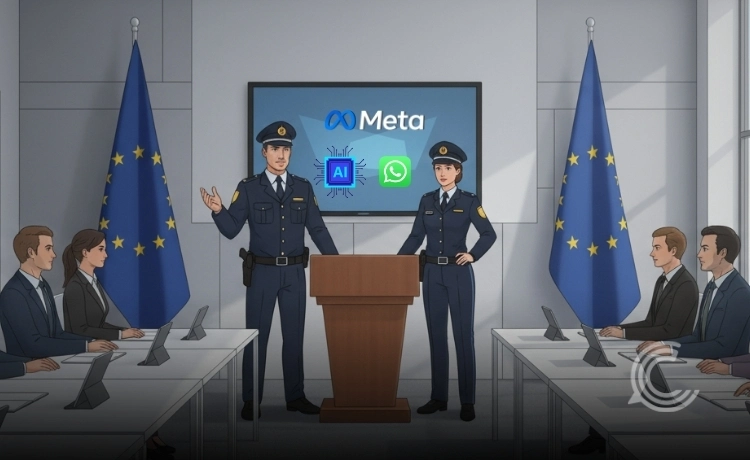
- The European Commission has opened an antitrust investigation into Meta’s new policy on AI providers’ access to the WhatsApp Business Solution.
- The probe focuses on a new policy that effectively blocks third-party AI chatbots from using WhatsApp for their primary service while allowing Meta’s own Meta AI to operate freely within the platform.
- The EU is assessing whether this policy breaches competition rules that prohibit the abuse of a dominant position, signaling a major challenge to current AI Integration practices.
The European Union has launched a formal antitrust investigation into Meta Platforms over its policies regarding the use of Artificial Intelligence (AI) in WhatsApp.
This reflects rising regulatory scrutiny of Big Tech’s move to integrate proprietary AI features into their dominant platforms, potentially giving them an unfair competitive edge in the burgeoning AI Integration market. The concern is whether Meta is abusing its market power to exclude rival AI providers.
The AI Feature at the Center of the Storm
The probe targets a specific policy update related to the WhatsApp Business Solution API. This tool is crucial, allowing businesses, from small retailers to large customer support centers, to communicate with their customers through WhatsApp.
In March 2025, Meta integrated its own conversational AI assistant, Meta AI, directly into the WhatsApp interface across European markets. This feature is easily accessible to all users for tasks like generating content or answering questions.
However, in October 2025, Meta announced an update to the terms of the WhatsApp Business API. This new policy prohibits third-party AI providers from using the API if AI is the primary service they offer, effectively blocking competing AI chatbots from leveraging WhatsApp’s massive user base to reach customers.
The Commission fears that this policy is a deliberate move to self-preference Meta AI by restricting its competitors’ access to WhatsApp’s vital communication infrastructure, via European Commission Press Release.
Why This Policy is Seen as Anti-Competitive
The European Commission’s main concern is that Meta, which owns a dominant position in the European messaging market through WhatsApp, is “leveraging” that dominance into the distinct and rapidly growing AI Integration market.
According to EU competition law, specifically Article 102 of the Treaty on the Functioning of the European Union (TFEU), a company with a dominant market position cannot take actions that eliminate or stifle competition. Regulators argue that by banning rival AI providers, Meta is making it significantly harder for them to compete, potentially harming innovation and limiting consumer choice.
Teresa Ribera, the EU competition enforcer, stressed the importance of protecting new markets, stating: “We must ensure European citizens and businesses can benefit fully from this technological revolution and act to prevent dominant digital incumbents from abusing their power to crowd out innovative competitors.”
A History of Scrutiny: Big Tech vs Europe
This investigation is the latest in a long series of actions by the EU aimed at reigning in the power of major technology firms, often called “Big Tech.” The EU has previously imposed massive fines on Google for anticompetitive practices related to its Android operating system and search dominance.
While the current probe uses classic antitrust rules, it runs parallel to the enforcement of the landmark Digital Markets Act (DMA), which targets “gatekeeper” companies like Meta, Alphabet, and Apple with clear do’s and don’ts to ensure fair competition. Meta’s WhatsApp is designated as a “core platform service” under the DMA.
The EU’s action follows a similar, earlier investigation launched by Italy’s competition authority (AGCM) in July 2025, which also widened its scope in November to examine the new WhatsApp Business Terms. Brazil has also initiated a probe into the matter.
Meta’s Defense and the Potential Outcome
A spokesperson for WhatsApp has called the claims “baseless,” arguing that the AI space remains highly competitive and that the new policy is a necessary measure. Meta claims the policy update is needed because third-party AI chatbots “put a strain on our systems that they were not designed to support,” suggesting technical and security justifications.
The Commission will now conduct an in-depth investigation. If the allegations are proven, Meta could face substantial financial penalties, fines up to 10% of its global annual turnover, and, critically, be forced to change its policy to allow competing AI providers fair access to the WhatsApp platform. The EU is also considering imposing interim measures to suspend the policy update quickly to prevent immediate, irreparable harm to competition in the AI Integration sector.