Circle Wins OCC Approval for National Trust Bank

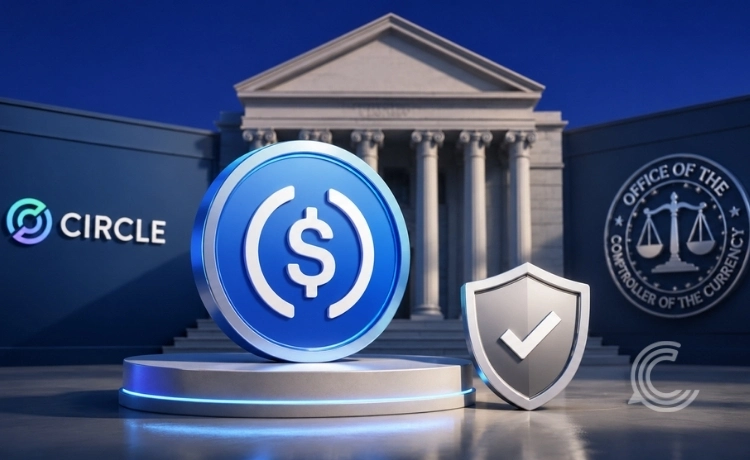
Circle Internet Group (NYSE: CRCL) has received final approval from the U.S. Office of the Comptroller of the Currency (OCC) to establish a national trust bank named First National Digital Currency Bank, N.A., which will operate under the brand Circle National Trust. The charter brings Circle’s custody operations squarely under federal supervision and paves the way for future reserve-management capabilities tied to USDC, the company’s widely used stablecoin.
Why It Matters
This is a historic step for stablecoin regulation in the United States. With its custody services being put under an OCC-chartered national trust bank, Circle has ensured that the plumbing of USDC comes under an existing, well-developed system of federal supervision in order to ensure the safekeeping of client funds as per their fiduciary obligations.
Jeremy Allaire stated in the post, “Federal oversight of our trust bank sets a new standard for transparency, governance, and scale for Circle’s infrastructure and unlocks a new phase of adoption, where leading financial institutions can build on public blockchains with clarity and confidence.”
What Circle National Trust Will Do
When it opens, Circle National Trust will initially provide fiduciary digital-asset custody services for Circle and its affiliates. The bank’s approved business plan states that, depending on market demand, it may later offer custody services directly to a limited set of institutional clients, focusing primarily on banks and regulated derivatives firms.
Importantly, the charter was written to allow additional capabilities in the future, including the possibility of the bank managing the USDC Reserves. If Circle moves reserve management into an OCC-regulated entity, operations tied to the stablecoin’s backing would fall under federal oversight, potentially enhancing the safety and transparency of USDC.
How This Fits Into Circle’s Regulatory Track Record
Circle has been trying to get as many regulatory approvals as possible around the world. It applied for the OCC charter on June 30, 2025. The company was an early adopter of U.S. state-level licensing, becoming the first firm granted BitLicense by the New York Department of Financial Services in 2015.
More recently, Circle became the first global stablecoin issuer to comply with the EU’s Markets in Crypto-Assets (MiCA) regime and holds licenses in the UK, Singapore, Bermuda, and Abu Dhabi Global Market. It has also met Canadian regulatory standards for value-referenced crypto assets.
With its international presence in addition to its newly obtained OCC charter, Circle is among the most highly regulated of all the major issuers of stablecoins. This is something that the company has been emphasizing as it courts banks and other large financial firms.
Industry Reaction and Implications
The decision is likely to be welcomed by players who want clearer regulatory guardrails for stablecoins. Custody security, reserve visibility, and regulatory clarity have been highlighted as impediments by banks, custodians, and other institutional crypto holders. A trust bank regulated by the federal government and affiliated with a major stablecoin provider is an answer to some of these challenges.
However, there will always be those who will doubt that federal regulation alone could solve broader questions of algorithmic behavior, liquidity problems during challenging times, and stablecoin infrastructure concentration. It would also be interesting to see how the question of reserve management will be handled if it is indeed going to be handled by the trust bank.
Bottom Line
OCC approval to establish Circle National Trust is a landmark for USDC’s institutional infrastructure. It creates a federally regulated hub for custody and a pathway to potentially bring reserve operations into U.S. banking oversight. For Circle, the charter is both a regulatory checkpoint and a product-market signal: the firm aims to make USDC a safer, more bank-friendly digital dollar for payments, settlement, and capital markets, and now it has the federal backing to push that case harder.