Amazon, Microsoft $52.5B India Bet Tests Trump’s Trade Doctrine

Key Points:
- Amazon announced plans to invest over $35 billion in India by 2030, following Microsoft’s pledge of $17.5 billion over four years, primarily targeting AI and cloud infrastructure.
- These investments are focused on scaling India’s rapidly growing digital economy, boosting local AI capabilities, expanding exports, and creating millions of jobs outside the U.S.
- The outflow of capital highlights a fundamental tension between a nationalistic economic policy focused on domestic job creation and the global, growth-first strategies of multinational U.S. tech firms.
The recent flurry of mega-investments by America’s technology titans, Amazon and Microsoft, into the Indian market has sent significant signals across the global economy. Within 48 hours, two of the world’s most influential corporations pledged billions.
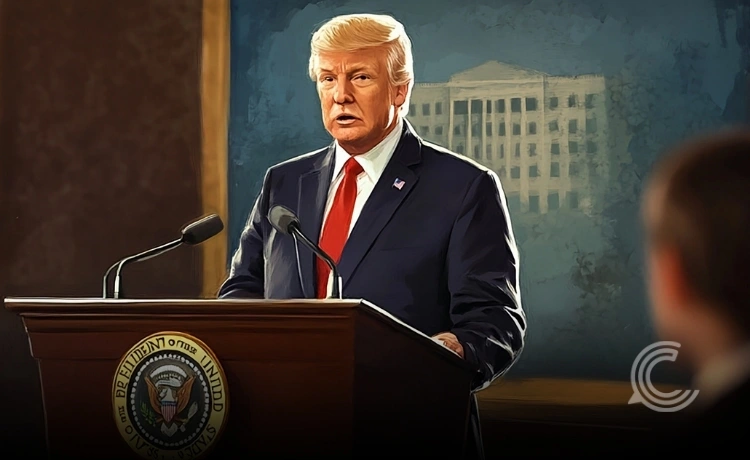
The massive outbound investment, driven by long-term strategic growth, puts a fascinating economic stress test on the “America First” policies championed by former and potentially future U.S. President Donald Trump, forcing a re-evaluation of what constitutes true Global Tech Alignment in the 21st century.
The President, in July 2025, urged American tech giants, including Microsoft, to “halt overseas hiring practices, including those in India and China, and instead focus on creating jobs at home,”
The Indian Investment bonanza
Amazon’s commitment of over $35 billion by 2030 builds on the nearly $40 billion it has already invested, primarily targeting AI-driven digitisation, export growth, and job creation.5 This comes just one day after Microsoft’s Chairman and CEO, Satya Nadella, pledged $17.5 billion, the company’s largest-ever investment in Asia, to bolster India’s cloud and AI ecosystem, as reported by The Economic Times,
These are not just capital transfers, but smart bets on the sheer, low cost talent pool of India, the emerging digital consumer market, and its future as a global manufacturing and export hub.
Amazon, as an example, is targeting to generate one more million new jobs and multiply cumulative e-commerce exports to $80 billion in India by 2030.
The Policy Framework of America First
The American outbound investment spurt is timed when the political wave in Washington is returning to economic nationalism. The America first policy by Donald Trump, especially his memo of America First Investment Policy of February 2025, is focused on making the United States the greatest destination of investment dollars in the world.
Here’s the plan of the Trump administration:
Reshorcing/Onshoring: The idea of reshorcing and onshoring is an encouragement given to American companies to relocate manufacturing and high value jobs back to the U.S.
Tariffs and Trade Barriers: The idea of protecting U.S. industries and punishing job exporting companies by tariffs.
Outbound Investment Screening: Strengthening Made to curb U.S. investment in sectors considered sensitive to national security, the Outbound Investment Rule being the main target of China.
The Clash of Economic Realities
A structural conflict to the massive flow of capital to India is emphasized. For multinational companies, Global Tech Alignment implies making investments in the places of the quickest growth and where the talent and costs of operations would be the most profitable. India offers a pool of talent in areas such as software engineering and AI research at a large cost reduction compared to Silicon Valley.
The opponents of the America First policy argue that restricting this global expansion would hurt American competitiveness in the long run.
With an AI infrastructure and a worldwide delivery pipeline established in India, U.S. companies can speed up their innovation processes themselves, resulting in higher profitability and better share performance-advantages that reimburse U.S. shareholders and pension funds.
On the other hand, the nationalistic approach sees all these billions as the would-be U.S. jobs, especially white-collar skilled positions, being offshored. The offshoring 2.0 is the current trend in offshoring in which high-tech positions are being relocated, including, but not limited to, call centres, leading to a risk of the American worker of being eroded.
Sailing through the Future of Global Tech Alignment
The cooperation between the two countries was highly encouraged by the Biden administration that viewed India as a major strategic antagonist and an economic companion. These firms, however, might now be pressured by the Trump administration with possible tax incentives on onshoring, or regulatory systems that examine high level capital outflows, even to partners.
In the meantime, the investments are an indication of corporate logic of global expansion, recruitment of talents and market penetration over the political rhetoric.