
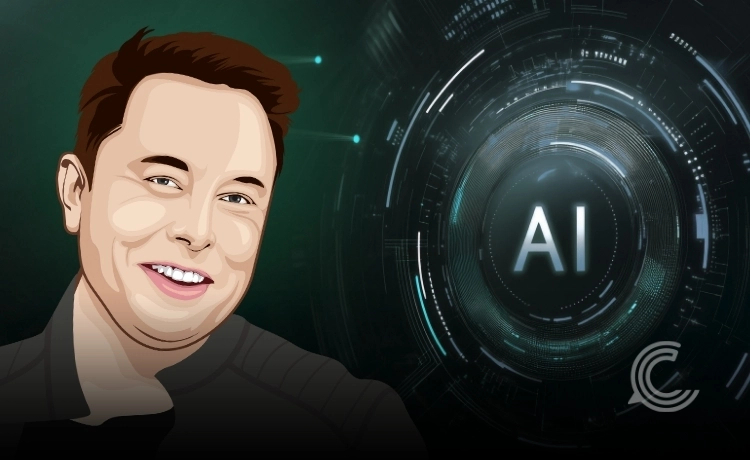
Key Points:
- Tech mogul Elon Musk predicts that advanced AI and robotics will solve the United States’ national debt crisis within the next three years
- Musk suggests there is a “high probability” that our perceived reality is a computer simulation, citing the rapid advancement of video games
- The entrepreneur envisions a future where human labor becomes optional, and automation redefines the concept of money and scarcity
Tech titan Elon Musk recently delivered a striking and dual-pronged vision of the near-future, one that touches both the macro-economic stability of the U.S. and the fundamental nature of existence itself. In a far-reaching conversation with investor and podcaster Nikhil Kamath, Musk presented AI-Powered Future technology not merely as an efficiency tool, but as the only viable salvation for the staggering American debt.
The AI-Powered Future and the Debt Crisis
Musk, the CEO of Tesla, SpaceX, and xAI, asserts that the economic challenges facing the U.S., particularly its massive national debt, are approaching an irreversible crisis point. “I think that’s pretty much the only thing that’s going to solve for the U.S. debt crisis because currently the U.S. debt is insanely high and the interest payments on the debt exceed the entire military budget of the United States,” he stated, as per the Podcast on Youtube.
The core of his argument rests on a profound, impending surge in AI-Powered Future productivity. Musk posits that the deployment of advanced artificial intelligence and humanoid robotics will usher in an era of material abundance, where automated production can outpace the debt’s growth curve.
He suggests this technological leap will generate an economic boom of such magnitude that it effectively inflates and grows the nation out of its fiscal woes within three years. This technologically optimistic view contrasts sharply with traditional, policy-driven debates over spending cuts and tax increases, which Musk dismisses as insufficient.
Is Our World a Simulation?
Shifting from economics to metaphysics, Musk also revived his long-standing, mind-bending stance on the nature of reality. He suggested there is a “High probability” that our reality is a simulation, building his case on the rapid, exponential evolution of video games.
He noted the vast leap from basic screens like Pong, which featured “two rectangles and a square batting back and forth,” to today’s complex, photo-realistic, and real-time games played by millions across the globe.
His main reasoning is that if this technological trajectory continues, the distinction between the virtual and the real will eventually collapse. He argues that games will one day be impossible to distinguish from actual life, complete with highly intelligent, autonomous characters built into them. The logic then follows that if future civilisations can achieve the ability to run countless, highly realistic simulations, the statistical likelihood of our current consciousness inhabiting the “base reality” versus one of the numerous simulations becomes extremely low, an idea that has long fascinated futurists and philosophers.
This simulation hypothesis, first popularized by philosopher Nick Bostrom, is, for Musk, an accelerating phenomenon, with the very “absurdity” of the world reinforcing its plausibility.
The End of Work and Money
The economic predictions flow directly from this technological outlook, leading Musk to envision a society profoundly changed by automation. As detailed in the conversation with Kamath, Musk predicts a “dramatic transformation” where human labor is no longer a necessity.
“My prediction is that in the future, working will be optional,” he said. This vision suggests a world where AI and robotics are sufficiently powerful to satisfy all human needs. In such a scenario, the fundamental economic concepts that underpin modern society, including money itself, would become obsolete.
He explains that money functions as a labor allocation database, but if all labor can be automated and scarcity is eliminated, the need for this database vanishes. “I think long term, I think money disappears as a concept. In a future where anyone can have anything,” he stated.
Navigating the AI-Powered Future Debate
While Musk’s vision of an AI-Powered Future solving the debt crisis is compellingly optimistic, it is not without critics. Economic experts and commentators caution that a tech-fueled boom is not a guaranteed fix. For instance, a report from Yale Insights noted that the current tangle of deals and overinvestment in the tech sector could lead to an “AI bubble” burst, mirroring the dot-com era.
Furthermore, a future without compulsory work raises profound questions about social structure, purpose, and equitable access to the abundance created by AI. These discussions highlight the essential need for ethical frameworks and governance to accompany this rapid technological advancement. Musk’s call for AI and robotics to be the “only way” forward places an immense and arguably precarious weight on the shoulders of developers and policymakers alike