Prada Group Acquires Versace for $1.4B in Major Luxury Fashion Deal

Key Points:
- The Prada Group paid approximately $1.4 billion for Versace, purchasing it from Capri Holdings which had acquired the brand for $2 billion in 2018.
- The primary goal is to relaunch Versace’s market fortunes by leveraging Prada’s operational expertise and complementary aesthetic to unlock “significant untapped growth potential.”
- The deal positions Prada to emerge as a stronger Italian powerhouse, aiming to compete more effectively with French giants LVMH and Kering through strategic Luxury Fashion Consolidation.
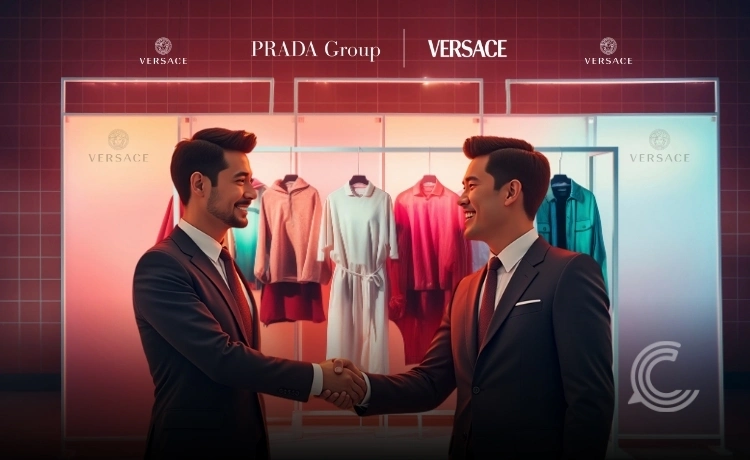
The Prada Group has officially completed its acquisition of fashion rival Versace in a deal valued at nearly $1.4 billion, a move that reshapes the landscape of Luxury Fashion Consolidation and returns one of Italy’s most recognised brands to domestic ownership, the company announced today.
Reason Behind the Deal
The deal, announced in April 2025 and finalised on Tuesday, December 2, 2025, represents Prada’s largest-ever acquisition and a strategic central point toward greater Luxury Fashion Consolidation. Prada’s chairman, Patrizio Bertelli, and his son, Lorenzo Bertelli, who is set to become Versace’s Executive Chairman, have long coveted the flamboyant Italian house.
The acquisition serves several critical strategic goals. Firstly, it offers Prada a complementary aesthetic to its own “ugly chic” and Miu Miu’s youthful appeal, instantly broadening the Group’s portfolio and target customer base.
Secondly, the move is a bid to compete with mega-conglomerates like LVMH and Kering by establishing a scaled Italian powerhouse. The Group believes Versace, a brand with high global recognition, has been underperforming under its previous owner, Capri Holdings, which struggled to position the brand’s bold profile in the recent era of “quiet luxury.”
How the Deal Transpired
The transaction was structured as a cash consideration for the entire 100% stake in Versace, purchasing it from Capri Holdings, which also owns Michael Kors and Jimmy Choo. Capri Holdings, which had bought Versace for $2.1 billion in 2018, was reportedly looking to reduce significant debt, especially after a separate merger attempt with Tapestry (Coach, Kate Spade) fell through due to antitrust concerns. This allowed Prada to secure the asset at a substantial discount compared to its previous sale price.
Lorenzo Bertelli revealed the interest had been active for years, saying that Prada returned to the negotiation table swiftly after the Tapestry deal failed, saying, “There had already been contacts during the COVID period… When that deal fell through over antitrust issues, we came back and tried to speed things up.”
Prada is funding the deal through new debt, but its strong financial health and $5.9 billion in revenue in 2024 positions the company to absorb the cost.
Potential Outcome and Future Direction
The integration process will be key to the success of this monumental Luxury Fashion Consolidation effort. Prada plans to immediately integrate Versace into its renowned Italian manufacturing and industrial system. This will leverage Prada’s expertise in leather goods and operational efficiency, aiming to bolster Versace’s accessories and leather goods offerings, a highly profitable segment within the market.
Patrizio Bertelli, Prada Group Chairman, emphasized the commitment to maintain Versace’s creative DNA, stating: “We aim to continue Versace’s legacy celebrating and re-interpreting its bold and timeless aesthetic; at the same time, we will provide it with a strong platform, reinforced by years of ongoing investments and rooted in longstanding relationships.”
Lorenzo Bertelli is expected to lead the brand’s next phase as Executive Chairman, focusing on accelerating growth in under-penetrated markets such as the Americas and Asia-Pacific. Analysts note that while the acquisition introduces initial debt leverage for Prada, the long-term vision is to generate accretive value by reviving Versace’s sales performance and maximizing the potential of its iconic brand equity.
The luxury sector anticipates Prada will utilise its retail execution and operational expertise to transform Versace’s financial trajectory.