
Key Highlights
- China will impose provisional anti-subsidy duties of up to 42.7% on EU dairy imports, targeting products including milk and cheese.
- The move is widely seen as retaliation for the EU’s tariffs on Chinese electric vehicles.
- The decision could significantly reshape global dairy trade flows and put pressure on food prices within the European Union.
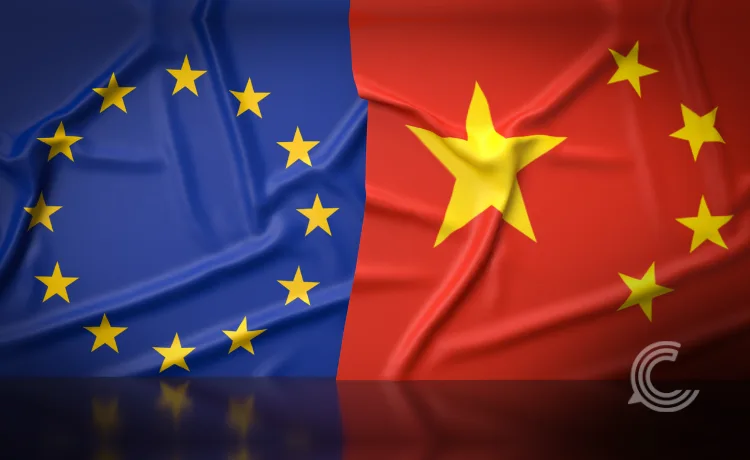
China has escalated trade tensions with the European Union by announcing provisional anti-subsidy duties of up to 42.7% on certain EU dairy products, widening the trade dispute between the two major economic blocs.
The tariffs, which range from 21.9% to 42.7%, will come into effect from Tuesday, China’s commerce ministry said on Monday.
Which EU Dairy Products and Firms Are Affected
The decision follows the conclusion of the first phase of an anti-subsidy investigation into EU dairy imports and is widely viewed as retaliation for the European Commission’s probe into subsidies for Chinese-made electric vehicles, according to Reuters.
Most affected companies are expected to face tariffs of around 30%, raising the cost of exporting dairy products to the Chinese market.
The tariffs target a range of dairy products, including milk and cheese, with high-profile items such as Roquefort, France’s iconic blue cheese, caught in the crossfire. Roughly 60 companies will be subject to the duties.
China imported approximately $589 million worth of EU dairy products covered by the probe in 2024.
China–EU Trade Tensions Rooted in Electric Vehicle Tensions
The China–EU trade tensions first intensified in 2023, when the European Commission launched an anti-subsidy investigation into Chinese electric vehicles, citing concerns about unfair state support. Since then, Beijing has opened investigations and imposed tariffs on EU brandy, pork, and now dairy, actions widely interpreted as retaliatory.
However, Beijing significantly reduced provisional tariffs on EU pork in its final ruling last week and partially spared major cognac producers such as Pernod Ricard, LVMH, and Remy Cointreau during its brandy investigation.
China’s commerce ministry said negotiations over the EU’s EV tariffs resumed earlier this month, although talks were due to conclude last week with no public outcome announced. A senior European diplomat in Beijing told Reuters that substantial differences between the two sides remain unresolved.
Impact on Global Dairy Markets and Food Trade
While the tariffs are focused on EU dairy, the ripple effects are likely to be felt across the global food industry. Higher barriers to the Chinese market may force European exporters to redirect excess supply to other regions, including Southeast Asia, the Middle East, and Africa, increasing competition and potentially pushing global dairy prices lower in the short term.
Meanwhile, China is expected to lean more heavily on alternative suppliers such as New Zealand and Australia, which could tighten supply and lift prices in those markets. The shift highlights how trade disputes increasingly reshape global food supply chains rather than simply reducing demand.
Pressure Builds on EU Food Prices
Within the European Union, the tariffs could add pressure to an already fragile dairy sector. Reduced access to China may depress farm-gate milk prices, squeezing producers even as consumer food prices remain elevated due to energy and logistics costs. In some markets, cheaper dairy inputs could ease retail prices, but prolonged oversupply risks undermining farm incomes and investment.
China’s Domestic Dairy Concerns
China’s commerce ministry said it found evidence that subsidised EU dairy imports were harming domestic producers. The decision is likely to be welcomed by Chinese dairy firms, which are struggling with oversupply, falling milk prices, and weakening demand, partly driven by declining birth rates and more cost-conscious consumers.
China, the world’s third-largest milk producer, has previously urged farmers to curb output and cull older cows to stabilise prices.
To look out for
Monday’s ruling is provisional and may be revised when a final decision is issued. The outcome will be closely watched as a barometer of whether China and the EU can de-escalate trade tensions, or whether agriculture will remain a key battleground in their broader economic standoff.