Nvidia Targets February for H200 AI Chip Exports to China

Key Points:
- Nvidia plans to deliver the first H200 AI chips to approved Chinese customers before mid-February 2026.
- The Trump administration has initiated an inter-agency review to permit these exports, breaking from Biden-era blanket bans.
- The deal includes a mandatory 25% “tax” or fee paid by the buyer to the U.S. government for every chip sold.
Nvidia is preparing to resume the export of its high-end H200 artificial intelligence chips to China, with the first shipments expected to arrive before the mid-February Lunar New Year.
The development, reported by Reuters, marks a significant moment in the ongoing struggle for global AI dominance as Washington experiments with a “transactional” approach to technology controls.
According to sources familiar with the matter, Nvidia has informed its Chinese customers, including major cloud providers, that it aims to fulfil initial orders using existing stock.
The chipmaker is expected to ship between 5,000 and 10,000 modules, which translates to roughly 40,000 to 80,000 individual H200 chips.
This news follows a dramatic policy change by President Donald Trump, who has argued that selling “second-tier” hardware is a strategic necessity.
A New Chapter in the “Chip War”
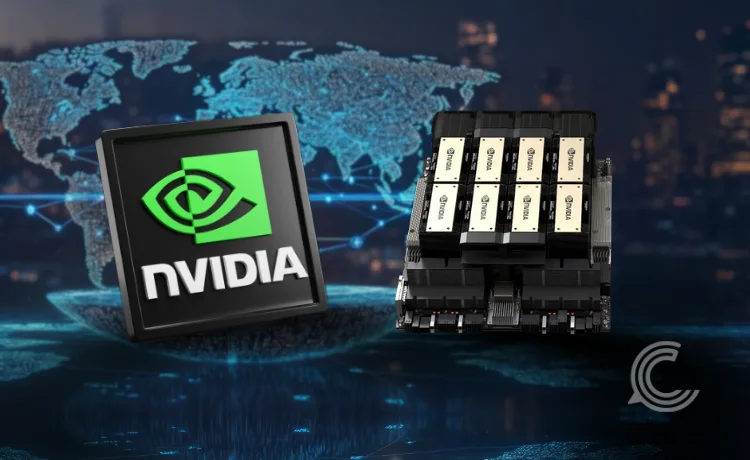
The H200 is Nvidia’s second-most powerful processor, sitting just behind the flagship Blackwell architecture. These innovations continue to drive progress in signal processing for AI and high-performance computing.
Historically, such advanced hardware was barred from the Chinese market under the Biden administration’s “small yard, high fence” policy.
However, the return of Donald Trump to the White House has introduced a “G2 bargaining” strategy that prioritises American revenue alongside security.
Under this new framework, the U.S. government will collect a 25% fee on every H200 sale to China.
This policy is designed to ensure that even as China gains access to high-end hardware, the U.S. Treasury directly benefits, potentially reinvesting those funds to ensure long-term global AI dominance.
The Trump Administration’s Calculation
The decision to allow these exports has sparked intense debate. Proponents within the Trump administration, led by figures such as “AI czar” David Sacks, argue that total bans backfire. They contend that cutting China off completely only accelerates the development of domestic alternatives like Huawei’s Ascend series.
Washington, by allowing the H200 sales, seeks to keep Chinese developers tethered to Nvidia’s CUDA software ecosystem.
As reported by The Diplomat, keeping Chinese firms on American hardware prevents them from fully migrating to domestic software stacks, which would be a far greater threat to American global AI dominance in the long run.
National Security vs. Market Dominance
Despite the economic optimism, the move has sparked a firestorm in Washington. Critics, including a bipartisan group of senators led by Tom Cotton and Chris Coons, recently introduced the SAFE CHIPS Act.
This legislation seeks to block export licenses for advanced AI chips to adversarial nations for 30 months, fearing that the Nvidia H200 AI chips could be used to supercharge Beijing’s military surveillance and autonomous weapons systems.
Currently, the Commerce Department has distributed license applications to the Departments of State, Energy, and Defense,
These agencies have 30 days to provide their assessments. While the review is described by administration officials as “thorough and not a perfunctory box-checking exercise,” the final authority rests with the President.
Nvidia’s Positioning
For Nvidia, the reopening of the Chinese market represents a significant financial opportunity.
During the Biden administration, Nvidia was forced to sell “de-tuned” versions of its chips, such as the H20, which lacked the power required for massive AI training.
The H200, by contrast, is a powerhouse. It features 141GB of HBM3e memory and is nearly 45% faster at handling large language models like Llama 2 than its predecessor, the H100.
Market Implications
However, the path forward is not without obstacles in Beijing. The Financial Times reported that Chinese regulators are considering their own restrictions, potentially requiring local firms to buy a specific ratio of domestic chips for every Nvidia H200 AI chips they import.
For Nvidia, the reopening of the Chinese market represents a massive revenue opportunity.
Analysts at Investing.com suggest that China could represent tens of billions of dollars in annual sales if these shipments continue. This influx of capital is seen as a way for U.S. firms to outpace international rivals and maintain their lead in the race for global AI dominance.
However, the “transactional” nature of these deals means that policy could shift at any moment.
As 2026 approaches, the tech world will be watching closely to see if this “revenue-for-access” model becomes the new standard for international trade in the age of artificial intelligence.