Global Plastic Output Set to Rise 52% And No Waste System Can Keep Up

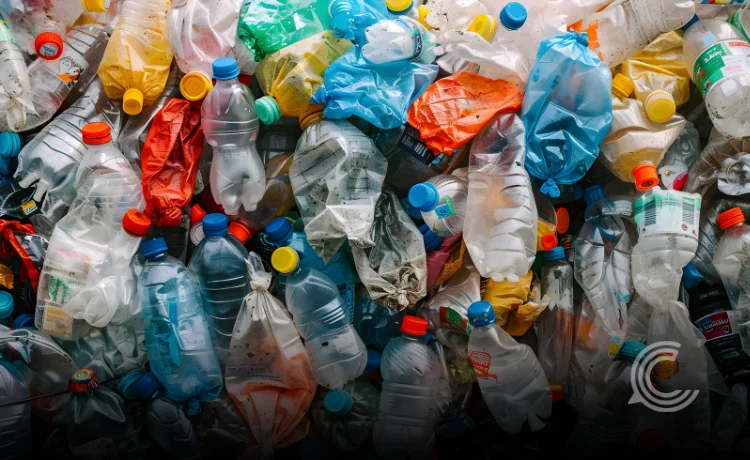
Key Highlights
- A new Pew analysis warns that plastic production, not waste, will drive a 58% surge in emissions by 2040.
- Even the most efficient recycling systems cannot offset the climate and health damage caused by manufacturing new plastics.
- Global plastic use is projected to hit 280 million tonnes annually, as governments fail to cap output.
Despite decades of campaigns showing turtles snared in six-pack rings and beaches buried in trash, the world is still ramping up plastic production at an unprecedented speed.
A comprehensive new report by the Pew Charitable Trusts, conducted in collaboration with ICF International, indicates that the deepest environmental and health harms over the next 15 years will come not from poorly managed waste, but from the explosive rise in new plastic production.
Plastic’s Climate Crisis Is Being Driven by Production: Not Waste, Warns New Global Study
According to the report, global plastic pollution is on track to reach 280 million metric tonnes a year by 2040, equivalent to “a dump truck’s worth every second,” as described in the analysis. Yet the biggest climate blow is not what ends up in landfills or oceans, but what happens before plastic becomes waste at all.
Production Outpaces Every Waste Solution
Pew’s 2025 “Breaking the Plastic Wave” report highlights a rather grim reality. The global production of new plastic is set to increase 52% by 2040, more than double the projected expansion of waste-management systems. Recycling remains stuck in single digits globally, and according to Pew’s integrated modeling, even an ideal system would fail to keep pace with demand.
The consequences are staggering. Pew estimates that plastic-related greenhouse gas emissions will jump 58% by 2040, reaching 4.2 gigatons of CO₂ equivalent per year. As reported in the study, if plastic production were a nation, it would rank as the world’s third-largest emitter, behind China and the US, as reported by Bloomberg.
You May Also Like – Epidemiology Events
The core reason: plastics overwhelmingly come from fossil fuels, and manufacturing them generates far more emissions than any downstream stage, including recycling or disposal.
A Treaty Failure That Leaves the World Exposed
The report lands just months after global negotiations for a plastics treaty collapsed, with major producing countries blocking proposals to limit output. As highlighted by Pew, the political gridlock leaves the world on a “business-as-usual” trajectory, one that dramatically accelerates both climate and health impacts.
Winnie Lau, director of Pew’s Preventing Ocean Plastics project, told reporters the goal of the research was to bring together fragmented findings into “one integrated analysis” that captures the full lifecycle of plastics, including often-overlooked sectors such as construction, transportation, and agriculture.
You May Also Like – Agriculture & Forestry Events
The Hidden Health Toll of the Production Boom
Plastics contain around 16,000 chemicals, and more than a quarter are categorized as potentially harmful. A surge of recent scientific studies, many referenced in Pew’s analysis, has examined how endocrine-disrupting chemicals, commonly found in cookware and cosmetics, may affect reproductive, digestive, and cognitive health.
Beyond chemical exposure, the manufacturing and disposal of plastics pose substantial population-level risks. Pew estimates that these processes will cost the world 5.6 million healthy life years in 2025, rising to 9.8 million by 2040. Primary production alone accounts for the bulk of cancer and respiratory-related burdens.
Why Recycling Isn’t the Silver Bullet
Environmental advocates welcomed the report but questioned whether Pew’s projections about higher recycling rates were realistic. According to the founder of Beyond Plastics and former EPA regional administrator Judith Enck, “plastic recycling has never reached double digits because chemical complexity makes large-scale recycling technically and economically infeasible.”
Enck stressed that relying on recycling “wastes valuable time,” arguing for hard limits on new production and tighter rules on toxic additives.
You May Also Like – Reproductive Medicine Events
Solutions Exist, But Require Hard Political Choices
Pew outlines several pathways to reduce plastic’s footprint, from mandating reusable packaging to improving chemical safety. Eliminating production subsidies and expanding collection systems could theoretically double recycling and push close to full retrieval of consumer packaging.
However, even in this best-case scenario, microplastics driven by tyre dust, paint, and agricultural plastics remain the toughest challenge, with few viable alternatives available.
The report’s central message is clear: without cutting production, every other solution will fall short.