Japan’s Nikkei Reaches New Peak on AI-Led Surge

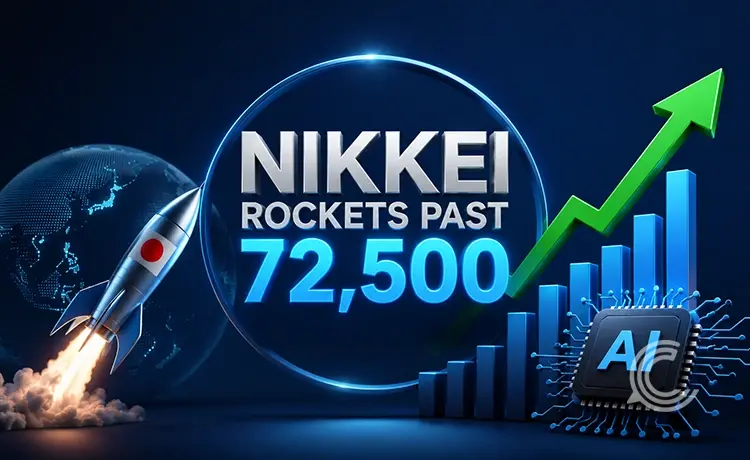
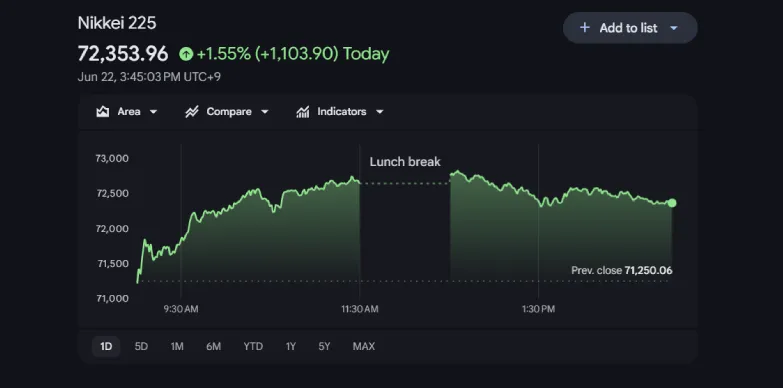
Japan’s benchmark stock index raced to a record high today, June 22, 2026, Monday, topping 72,500 for the first time in its 77-year history. The Nikkei surged to almost 2%, which added almost ¥25 trillion in market value in a single session and posted its biggest weekly gains since August 2024. Investors piled into chip suppliers, factory equipment names, and data firms as AI optimism and a weaker yen fueled the move.
AI Stocks Lead the Charge
Semiconductor-related firms and industrial tech names led gains. Furukawa Electric and Murata Manufacturing, as well as conglomerates with major tech stakes, including SoftBank Group, experienced strong buying. Traders said fresh interest in AI and the hardware that powers it is reshaping investor flows, with Japan’s electronics and manufacturing base directly in the spotlight.
A Weak Yen Helped Exporters
The yen trading near the 160 per dollar mark gave exporters a tailwind. A cheaper yen raises the competitiveness of Japanese goods overseas and boosts expected corporate profits when translated back to yen. This dynamic drew money into cyclical names and exporters, amplifying the rally.
Oil Drop Eases Inflation Worries
Signs of progress in the US-Iran talks knocked the oil prices lower. This scenario has eased one of Japan’s big inflation pressures because Japan imports the bulk of its energy, so cheaper crude can cool domestic price pressures. Lower inflation means less pressure on the Bank of Japan to tighten policy, and this calming of rate-hike fear helped risk appetite in equities.
But The Step Up Carries Flashpoints
The gains come with familiar caveats. The market remembers August 2024, when a modest 0.25% point move by the Bank of Japan sparked a violent swing. The Nikkei plunged 12% in a single day, then, the worst single-session drop since 1987. This episode exposed a still-large carry trade where roughly half a trillion dollars of global capital is estimated to be borrowed in yen and invested in higher-yielding assets overseas.
If the BOJ signals tighter policy, or if the yen suddenly strengthens, those positions could unwind quickly and trigger sharp volatility. The central bank has not taken itself off the table and remains under scrutiny by global investors.
Geopolitical Fragility Remains
The recent oil relief depends on a fragile diplomatic path. Negotiations between the US and Iran are volatile, and political shifts or threats could reverse market calm fast. Former US political figures have already threatened to scuttle the deal, underscoring how fragile the peace is and how quickly oil and risk sentiment could swing.
China Demand Softens for Some Suppliers
Even amid the rally, not all data is pointing up. Christophe Barraud, Head of Discretionary Management and Research at LIOR GLOBAL PARTNERS, highlighted on X that Japanese chipmaking equipment suppliers have reported a 10% drop in sales to China. This sounds like a tale of two markets, one where a strong global appetite for AI is fueling optimism, but soft demand in key regions is still hurting some parts of the company’s revenue.
Investors Weighing Risk and Reward
This rally appears to be a convergence trade where the enthusiasm about AI technology, currency factors, and the brief respite in geopolitical concerns have converged. While this can help drive profits, history has shown that a reversal is likely to happen quickly when any of these links fall apart.
Traders have informed reporters that they are tracking BOJ remarks, dollar-yen rates, and oil prices.
What Comes Next
For now, the mood is bullish and headline-grabbing. The Nikkei is rewriting records, and investors are chasing exposure to Japan’s manufacturing heartland as it intersects with the AI boom. Yet the backdrop remains patchwork. A central bank decision, a spike in oil, or a sudden yen rebound could force a rethink.